Sleep is a fundamental biological process for humans, a state of rest that is as essential to our survival as food and water. From the outside, it appears simple: a period of quiet stillness. Yet beneath the surface, our brains and bodies are engaged in a highly active and meticulously organized sequence of events. To improve sleep quality and get better rest, it’s key to understand how sleep works. This includes knowing the sleep cycle and its specific stages. This blog takes an in-depth look at what happens when you sleep, delving in detail from light NREM stages to restorative deep sleep.
What Is Sleep?
Sleep is a naturally recurring process characterized by altered consciousness, relatively inhibited sensory activity, reduced muscle activity, and a decreased ability to interact with the surroundings.
During sleep, the body performs critical tasks essential for our well-being. According to the National Heart, Lung, and Blood Institute (NHLBI), sleep supports healthy brain function and physical health. Experts believe that sleep is a time for tissue repair, memory consolidation, and the resetting of key physiological systems.
Why Do We Sleep?
While the complete picture is still being assembled by sleep research, several key theories aim to explain why humans need to sleep. Few leading theories include:
Energy Conservation: By reducing metabolic rate and body temperature, sleep helps conserve energy that was expended during waking hours. This was particularly crucial for our ancestors when food was scarce.
Restoration and Repair: Sleep is prime time for the body to repair itself. During deep sleep, the body releases growth hormone, which facilitates the repair of muscles and tissues. It also helps bolster the immune system, making us better equipped to fight off infections.
Brain Plasticity: The brain plasticity theory posits that sleep is critical for brain development and function. It allows neurons to reorganize, playing a vital role in learning and memory consolidation. During sleep, the brain clears out waste products, like beta-amyloid, that accumulate during waking hours. This hypothetical function of sleep has been linked to preventing cognitive decline.
How Much Sleep Do We Need?
It’s easy to treat sleep as a numbers game, however, the total number of hours slept is only part of what leaves you feeling restored. The quality of your sleep is also important.
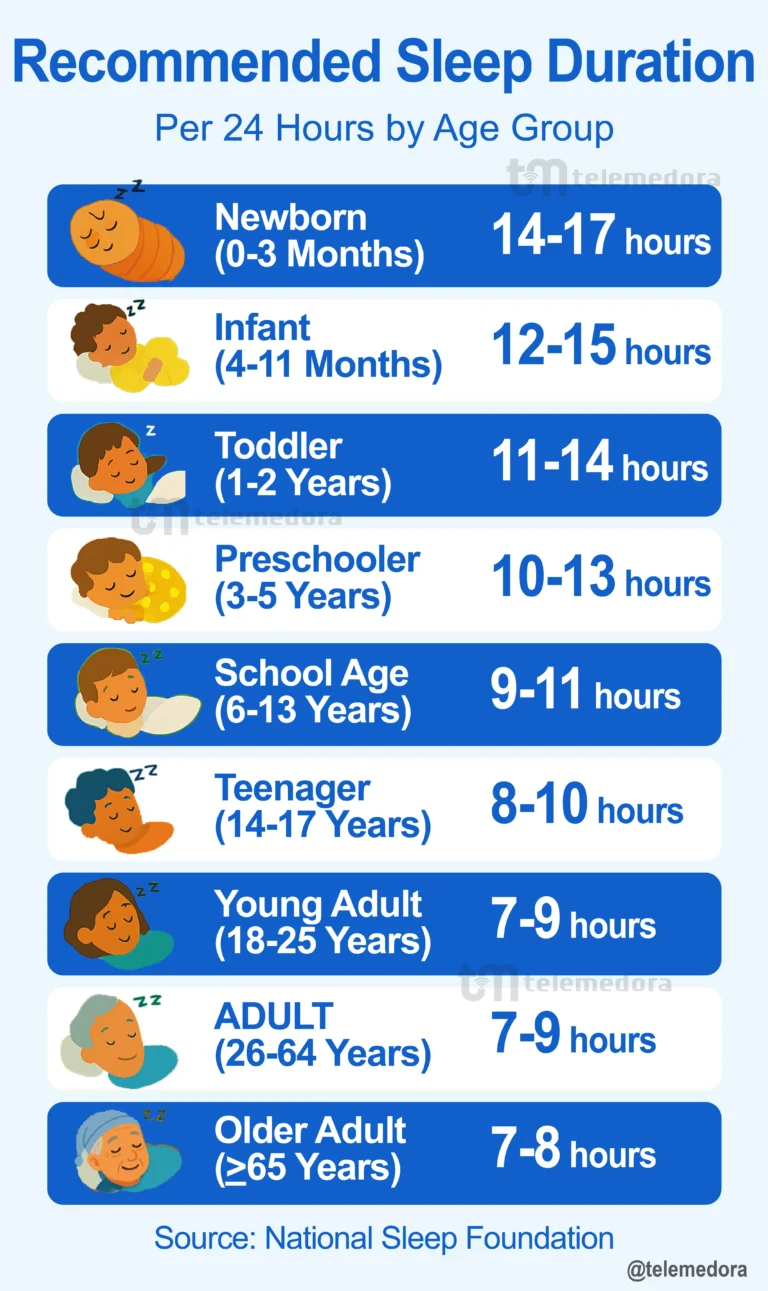
According to the National Sleep Foundation, the recommended sleep duration varies across age groups. For instance, for newborns (0–3 months) it is around 14 to 17 hours, for infants (4–11 months) it is 12 to 15 hours, and for toddlers (1–2 years) it is 11 to 14 hours. Preschoolers (3–5 years) are recommended 10 to 13 hours of sleep, school-aged children (6–13 years) 9 to 11 hours, and teenagers (14–17 years) 8 to 10 hours. Young adults (18–25 years) and adults (26–64 years) are recommended 7 to 9 hours of sleep per night, while older adults (65+ years) 7 to 8 hours.
Consistent inability to meet these recommended sleep targets could lead to sleep deprivation. This increases the risk of impaired cognitive function, weak immune system, and other chronic diseases like high blood pressure, heart disease, and diabetes.
Introduction to Sleep Cycle
Sleep is not a monolithic state. Instead, it progresses through a repeating pattern known as the sleep cycle. Each cycle is composed of several distinct stages of sleep and typically lasts about 90 to 110 minutes. Over the course of a full night, most adults may experience up to three to five of such sleep cycles.
This entire process is governed by the internal body clock called the Circadian Rhythm. Each of these circadian rhythm cycles usually lasts up to 24.2 hours in humans. It regulates different body functions including sleep. Circadian rhythm is controlled by the master orchestrator of sleep in the brain called the suprachiasmatic nucleus — an area found in the part of the brain called hypothalamus.
Stages of Sleep
The sleep stages are broadly divided into two main types: Non-Rapid Eye Movement (NREM) sleep and REM (Rapid Eye Movement). NREM sleep usually accounts for about 70-75% of total sleep time while REM sleep accounts for the rest of 20-25% of total sleep time.
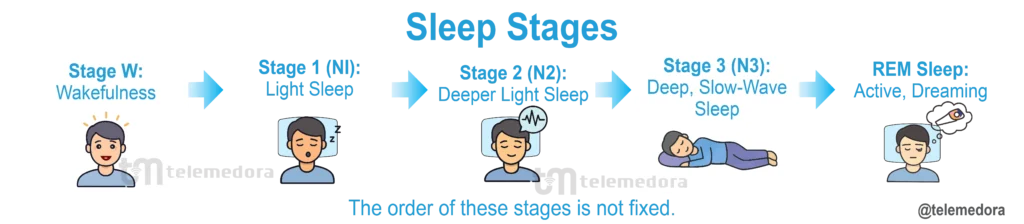
There are a total of five stages of sleep. Of which, one is wakefulness/alert, three stages belong to NREM sleep and one is for REM sleep. Each of these stages is defined by unique patterns of brain activity and physiological changes. During sleep, these stages do not occur in any single particular sequence. As mentioned earlier, each sleep cycle is of 90-110 minutes and repeats throughout the night, forming the building blocks of a restorative sleep experience.
The following are the five stages of sleep:
Stage W (Wakefulness)
Stage 1 (N1)
Stage 2 (N2)
Stage 3 (N3)
Stage 4 (REM Sleep)
Stage W (Wakefulness)
Stage W (Wakefulness) is the first stage, which further depends on whether the eyes are open or closed. During this foundational stage of consciousness, when your eyes are open, your brain shows fast, choppy activity known as beta waves, representing your fully alert state. However, when you start to get sleepy and close your eyes, your brain switches to slower, smoother waves called alpha waves, signaling the transition toward drowsiness. Importantly, all subsequent sleep stages flow from this starting point, making Stage W the essential foundation from which your sleep journey begins.
Stage 1 (N1)
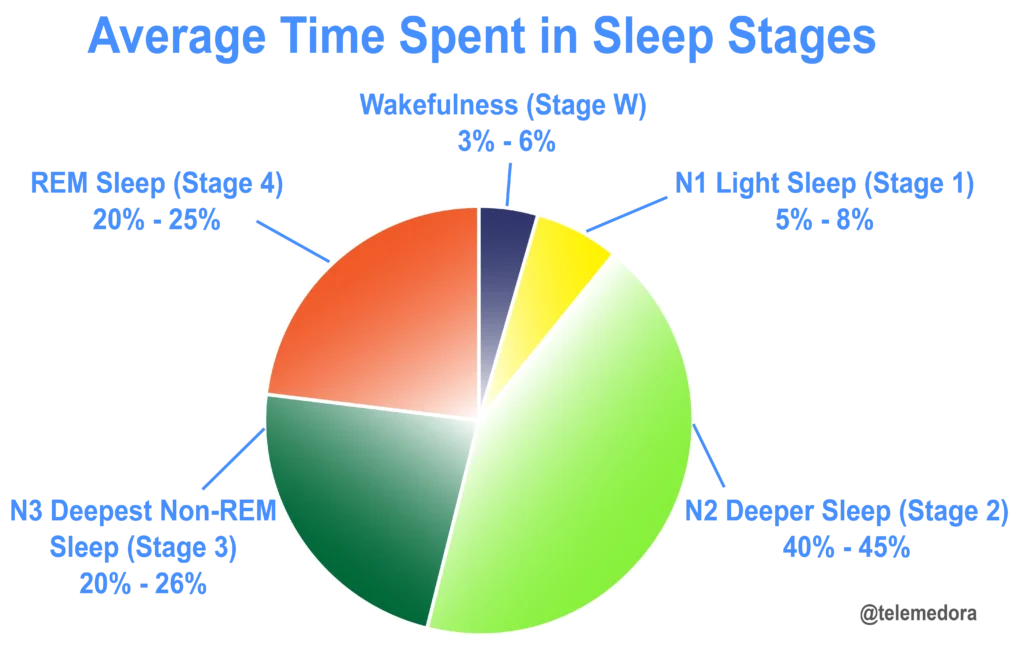
Stage 1 (N1) is the brief, transitional phase between wakefulness and sleep and accounts for about 5% of your total sleep. During this initial stage, generally there’s slight rolling of eye movements, slowing of heartbeat, and breathing may start, muscles may start to relax. Some people might experience sudden muscle twitches known as hypnic jerks. It is very easy to be awakened from N1 sleep, and people often feel upon waking as if they hadn't actually been asleep at all.
Stage 2 (N2)
Stage 2 is a more stable period of light sleep before you enter deeper stages, accounting for approximately 45% of your total sleep time. During this intermediate sleep phase, your heart rate and breathing slow further while your body temperature drops, creating a more relaxed physiological state. All eye movements cease during this stage, and your brain activity slows significantly, though it becomes punctuated by brief bursts of activity known as sleep spindles and K-complexes. Researchers believe these unique brain waves are important. They help with memory consolidation and protect you from waking up due to outside noise. This stage is both restorative and resilient to disturbances.
Stage 3 (N3, or Deep Sleep)
Stage 3 is the deepest phase of NREM sleep, often called deep sleep or slow-wave sleep, making it the most critical stage for physical restoration and for feeling refreshed in the morning. About 25% of your sleep time is spent in this profound sleep state, during which it becomes very difficult to wake someone up, and if you are awakened, you will likely feel groggy and disoriented for several minutes. During N3, your brain produces very slow, high-amplitude brain waves known as delta waves. This is also when your body performs most of its essential repair work, including repairing tissues, building bone and muscle, and strengthening the immune system. It is also the phase when phenomena such as sleepwalking, night terrors, and bedwetting most commonly occur.
REM Sleep (Stage 4)
REM sleep is the final stage of a sleep cycle, making up 25% of total sleep time. This stage usually starts 90 to 120 minutes after falling asleep. The brain is active like when awake, but the body stays still. This stage is when vivid dreams happen.
Eyes darting back and forth behind closed lids characterize this stage. It's also marked by irregular breathing, heart rate, and blood pressure.
Muscle atonia paralyzes the body during dreams at this stage, and waking up during this paralysis causes sleep paralysis.
REM sleep is crucial for cognitive health. It helps with memory, learning, and mood regulation.
Why Sleep Stages Matter?
Disrupting the sleep cycle can have serious effects on both the body and mind as deep sleep is essential for physical restoration, while REM sleep supports mental and emotional processing.
Many sleep disorders are defined by their impact on sleep architecture. For example, sleep apnea, a condition where breathing repeatedly stops and starts, can cause frequent awakenings that prevent a person from reaching or maintaining the deeper, more restorative sleep stages. This fragmentation severely compromises sleep quality.
Protecting the integrity of your sleep stages is key to overall health. That’s where sleep hygiene, a set of habits and practices for regular good sleep, is important. By creating a consistent routine and an optimal sleep environment, you support your body’s natural ability to cycle through each vital stage, ensuring you wake up feeling truly restored.
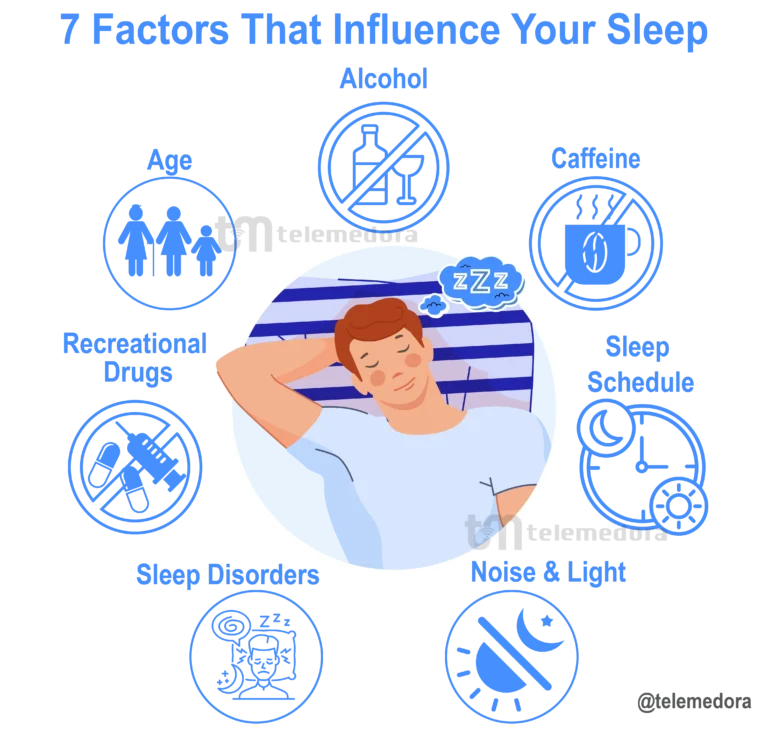
Top 7 Things That Affect Your Sleep
Various factors can impact how well you sleep each night, ranging from lifestyle habits to environmental factors.
Age: Age plays a vital role in the quantity of sleep and sleep architecture. Newborns spend a striking amount of time in REM and can enter it soon after falling asleep. As children grow, sleep starts to resemble the adult pattern. Later in life, REM tends to shrink, with older adults typically spending less of the night in that stage.
Alcohol: Alcohol can initially make you feel sleepy, but it disrupts healthy sleep, causing more frequent awakenings and less restful sleep. Moreover, it reduces REM sleep, which handles memory and emotions, potentially resulting in fatigue and poor focus during the day.
Caffeine: Caffeine’s effects on sleep differ depending on the person and their consumption habits. In some people, caffeine intake in the afternoon could lead to insomnia. Consuming caffeine near bedtime harms your sleep the most.
Recreational drugs: The brain’s sleep cycle can be greatly disrupted by recreational drugs, causing issues such as insomnia and irregular sleep patterns. These effects differ based on the substance and can last beyond first use.
Noise & Light: Noise and light near bedtime impair sleep by reducing melatonin, raising cortisol and heart rate, and causing light sleep. This leads to grogginess, poor focus, and long-term health issues. Bright screens and traffic noise amplify these effects.
Sleep disorders: Sleep disorders like sleep apnea, Restless Leg Syndrome, etc., cause sleep fragmentation leading to frequent awakenings, making it harder for the brain to move smoothly through the stages of sleep.
Irregular sleep schedule: A run of late nights, early alarms, or generally irregular sleep can throw the usual rhythm off course, leading to an atypical cycle for days at a time.
Tips for Better Sleep Hygiene
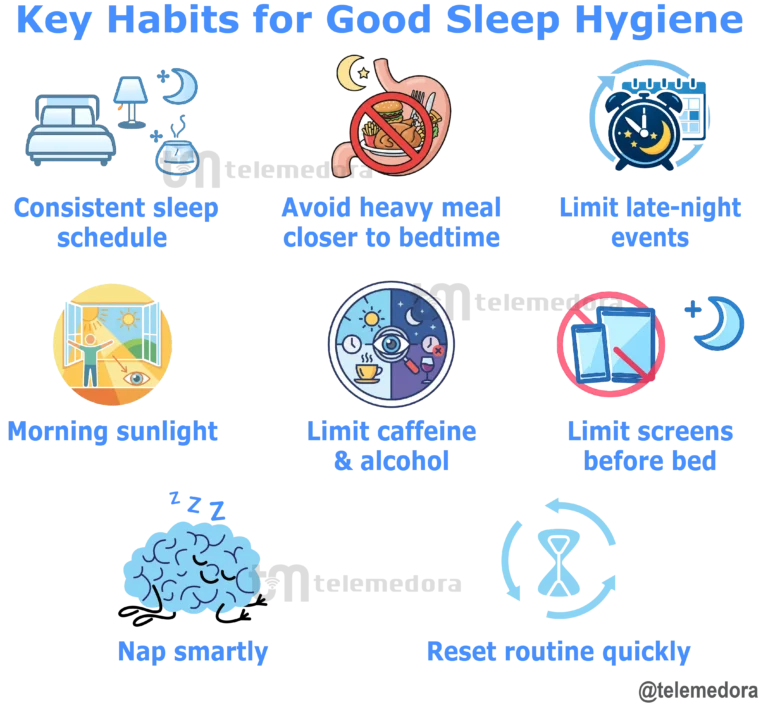
You can’t control the amount of sleep you would get every night, however, you can stack the odds in your favour. The way to go is by regularly following a set of habits which compromise what we call sleep hygiene on a regular basis. Below are the tips shown to improve sleep:
Regular Sleep Schedule: Going to bed and waking up at roughly the same time each day makes it easier for your internal clock to keep steady time.
Daylight Exposure: Seek out natural daylight, particularly in the morning. Exposure to daylight helps anchor your circadian rhythm, signalling when it’s time to be alert and when it’s time to wind down.
Daily Exercise: Working out early in the day improves sleep by reducing stress and promoting sleepiness, while intense workouts near bedtime should be avoided.
Limit Alcohol: Be cautious with alcohol in the evening. A drink might make you drowsy, but it can disrupt sleep later in the night and interfere with the normal pattern of sleep stages.
Quiet, Comfy Bedroom: Protect your sleep from noise and light. Even small disturbances can fragment sleep, so keep the bedroom as dark and quiet as you can.
Bedroom for Sleep Only: Reserve bedroom for sleep and intimacy. Avoid doing work, eating or watching TV on your bed.
Comfortable Bedding: A good mattress and comfortable pillows won’t solve every sleep problem, but they can remove simple barriers to staying asleep.
Limit Caffeine: Avoid caffeine after 2 PM in the afternoon, if possible. Late evening caffeine intake has been shown to delay sleep-onset.
Smoking Cessation: Steer clear of smoking because nicotine acts as a stimulant and it may interrupt your sleep cycle, aggravating issues like insomnia and sleep apnea.
Avoid Recreational Drugs:Avoid recreational drugs as they can lead to sleep fragmentation and poor quality sleep.
When to seek care
If you’re dealing with persistent poor sleep, excessive daytime sleepiness, loud snoring, insomnia or fatigue, etc. it’s worth discussing it with your doctor. As these complaints could be signs of serious but usually treatable sleep disorders like sleep apnea. Addressing sleep complaints in a timely manner can be the difference between merely getting through the night and waking up properly rejuvenated. If you or your loved ones suffer from sleep issues, call Telemedora at 650-687-7368 or visit telemedora.com to find out how we can help you. Whether it's sleep apnea, insomnia, or just restless nights, Telemedora brings expert care directly to your home. We help patients get the rest they need so they can wake up refreshed, focused, and ready to crush their goals for the next day.
Get your free insurance verification by filling out this simple form.
Disclaimer
This is an educational blog and not medical advice.
References
Cai, D. J., Mednick, S. A., Harrison, E. M., Kanady, J. C., & Mednick, S. C. (2009). REM, not incubation, improves creativity by priming associative networks. Proceedings of the National Academy of Sciences of the United States of America, 106(25), 10130–10134.https://pubmed.ncbi.nlm.nih.gov/19506253/
Drago, V., Foster, P. S., Heilman, K. M., Aricò, D., Williamson, J., Montagna, P., & Ferri, R. (2011). Cyclic alternating pattern in sleep and its relationship to creativity. Sleep Medicine, 12(4), 361–366. https://linkinghub.elsevier.com/retrieve/pii/S1389945711000578
Yetton, B. D., McDevitt, E. A., Cellini, N., Shelton, C., & Mednick, S. C. (2018). Quantifying sleep architecture dynamics and individual differences using big data and Bayesian networks. PloS One, 13(4), e0194604. https://pubmed.ncbi.nlm.nih.gov/29641599/
Yordanova, J., Kolev, V., Wagner, U., & Verleger, R. (2010). Differential associations of early- and late-night sleep with functional brain states promoting insight to abstract task regularity. PloS One, 5(2), e9442. https://pubmed.ncbi.nlm.nih.gov/20195475/