
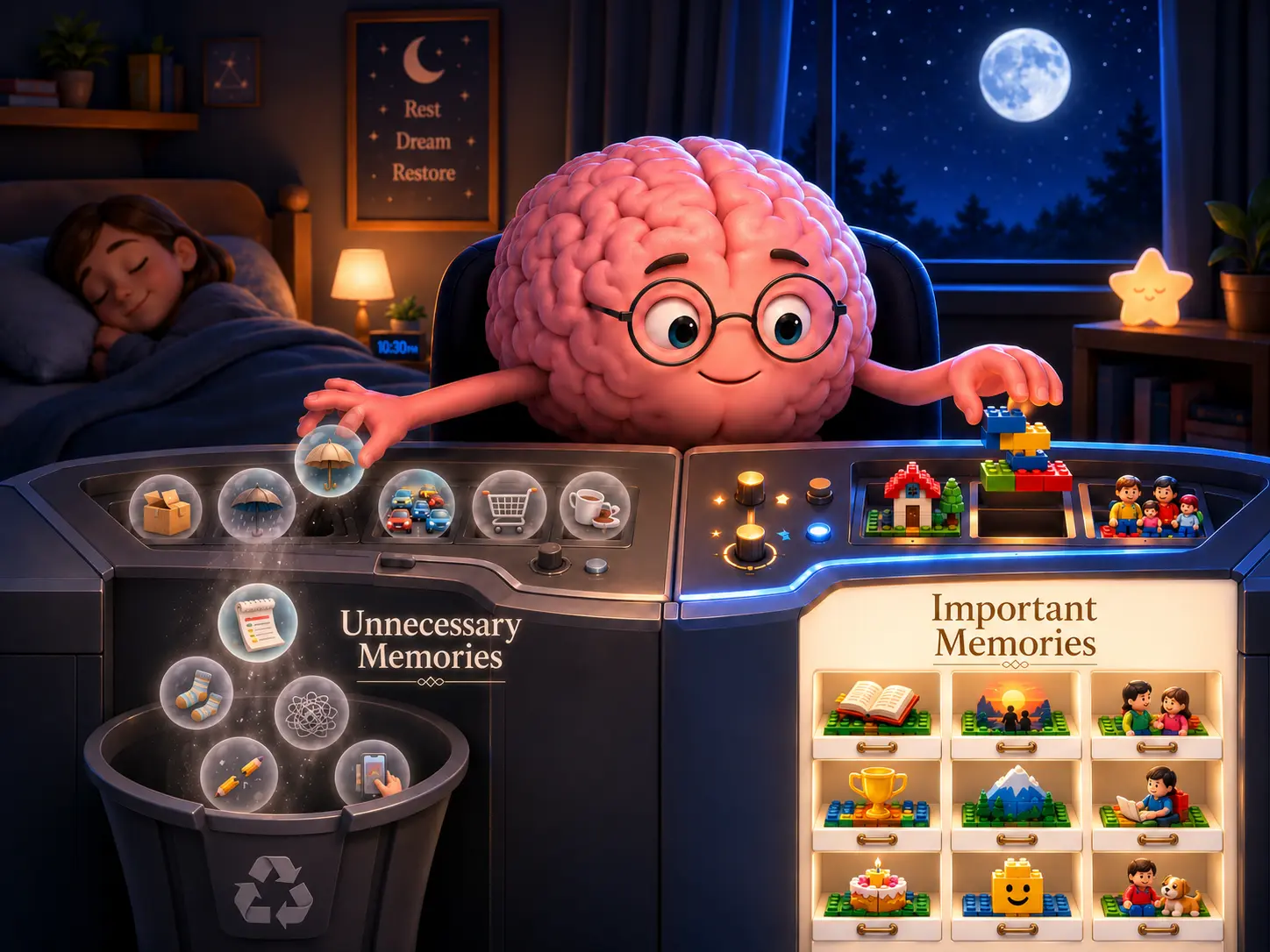
Sleep is essential for memory. The hippocampus, a memory center deep in the brain, helps store memories. During sleep, the brain sorts, categorizes, and organizes memories. The brain stores important memories to be retrieved later. If not useful, memories may be erased forever.
During deep sleep, the brain basically resets and makes it possible for you to store new memories the next day. If this does not happen, your brain is filled with old information and this makes it hard to learn new information.
A simple way to understand this is to imagine having space on hard drive of computer. The more space, the easier it is to store new information.
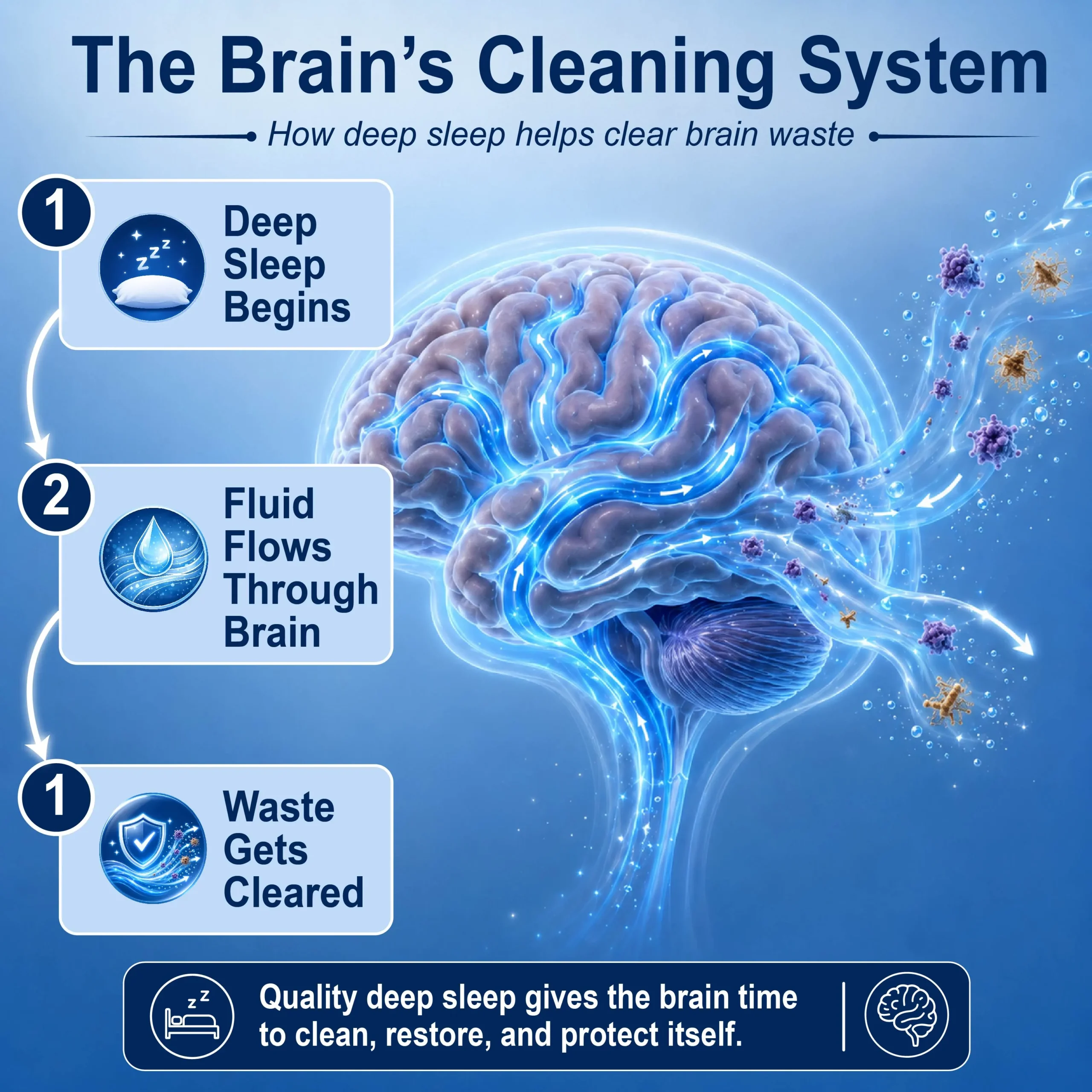
Your brain actually has its own built-in cleaning system, known as the glymphatic system. This system allows your brain tissue to literally wash away the day’s waste while you sleep.
This cleaning process is incredibly important because it flushes out specific proteins, such as amyloid-beta and tau. If these proteins are left to build up over time, they may cause memory conditions like Alzheimer’s disease.
The glymphatic system relies heavily on deep sleep to do its best work. When your rest is constantly interrupted, it cannot clear out the waste properly. This disruption can happen because of:
Just like leaving dirty dishes to pile up in the sink, skipping out on deep sleep means the brain’s waste gets left behind, which can impact your brain’s health over time.
Obstructive sleep apnea occurs when the throat muscles relax during sleep, causing complete or almost complete airways collapse, cutting off airflow intermittently. When the airflow gets cut off, oxygen levels go down, and your brain kicks in a survival reflex that momentarily wakes you up so you can breathe again.
This can fragment sleep all night long. The brain may not get enough deep, steady rest. Repeated oxygen drops can also stress blood vessels and brain tissue.
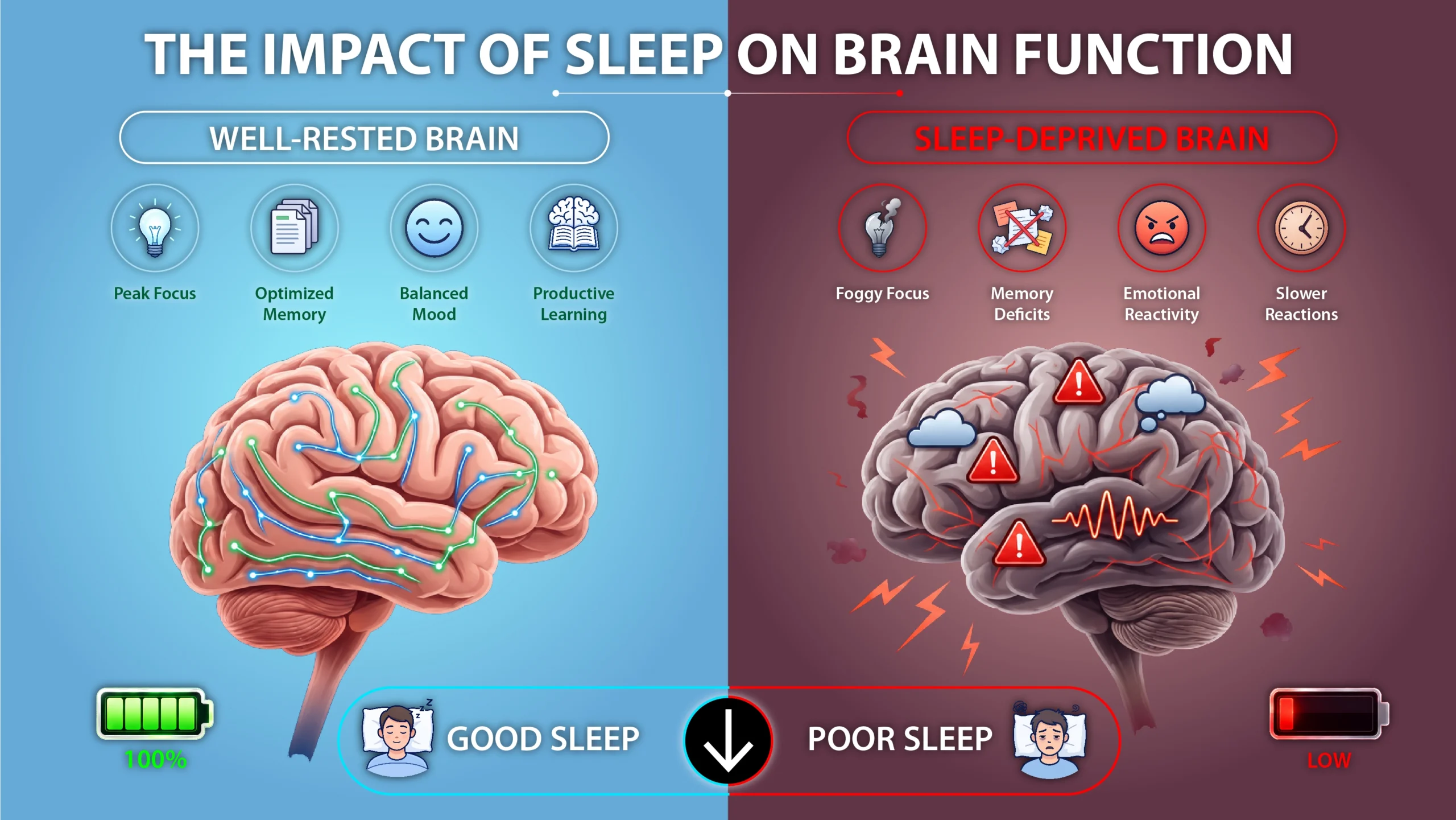
People with untreated sleep apnea often describe brain fog, poor concentration, forgetfulness, slower thinking, and low mental clarity.
Sleep apnea is important because it is treatable. When breathing improves during sleep, many people notice better daytime clarity and energy.
Insomnia is more than “not sleeping enough.” It often involves a state of high alertness at bedtime or in the middle of night. The body may feel tired, but the brain will not shut down.
Stress and anxiety can keep the brain awake. At the same time, poor sleep can make stress and anxiety worse. This back-and-forth pattern can become exhausting.
Chronic insomnia is also linked with higher risk of mood problems. Sleep difficulty may appear before or alongside depression and anxiety. This does not mean every person with insomnia will develop a mood disorder, but it does mean ongoing sleep trouble deserves attention.
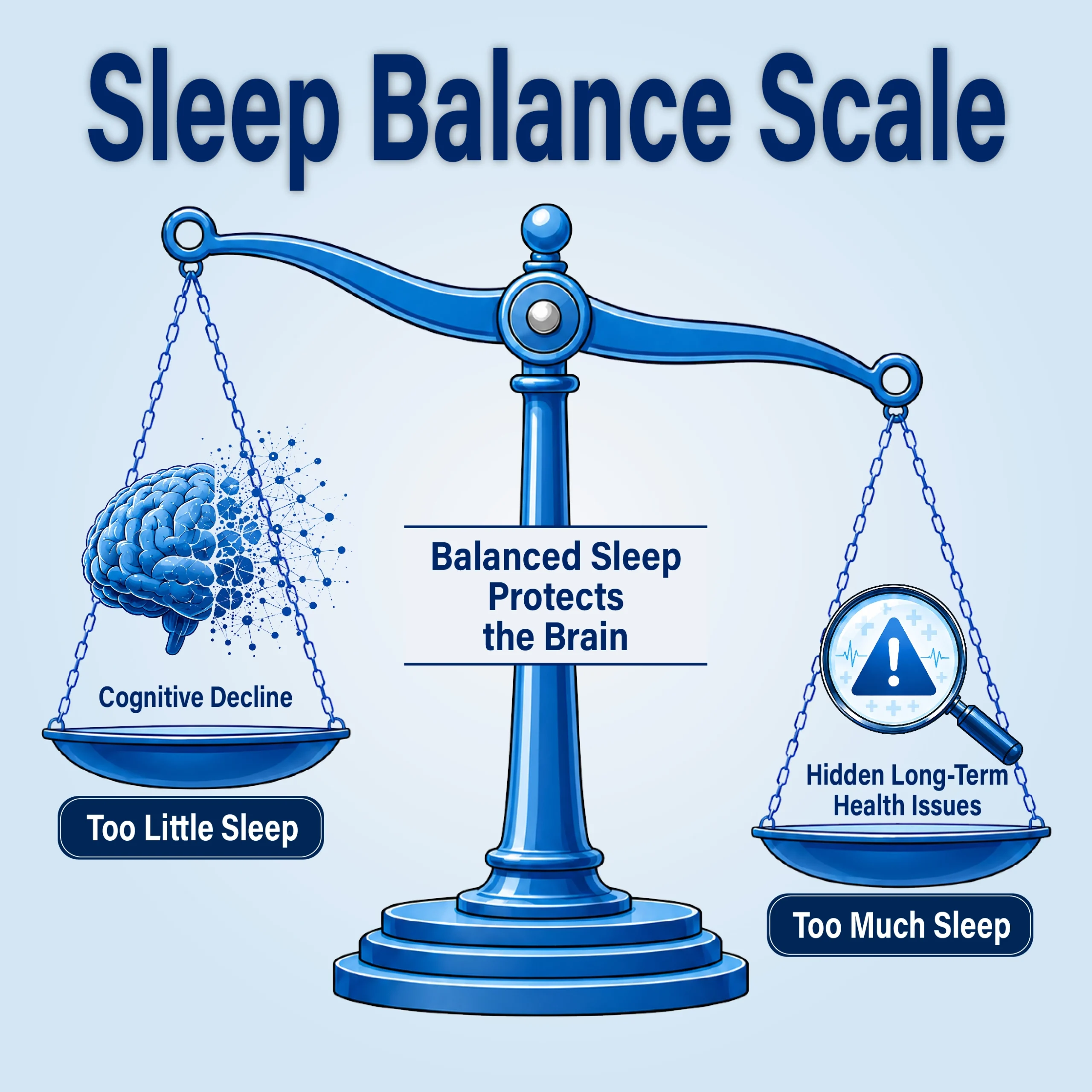
If irregular sleep goes on for months or years, the brain loses some of its resilience. Both short and long sleep duration are associated with worse cognitive outcomes.
Remember, regular, balanced sleep is the best way to protect your brain as you age.
Sleep does not just clean the brain; it protects its blood supply. Poor sleep is closely tied to high blood pressure and heart problems, which can restrict the vital flow of blood and oxygen to the head.
Missing out on rest also triggers a rise in inflammation and cellular stress. Over time, this chronic wear and tear can cause serious damage:
Chronic sleep loss leaves the brain physically vulnerable and struggling to maintain its own health.
Sleep is one of the brain’s most important healing tools. It restores energy, resets learning circuits, strengthens memory, steadies mood, supports blood vessels, and helps clear waste.
For anyone struggling with poor sleep, the experience is real. Brain fog, forgetfulness, and emotional exhaustion are not signs of weakness. They may be signs that the brain is not getting the recovery it needs.
Better sleep is not just about feeling rested tomorrow. It is about protecting the brain for the years ahead.
