Obstructive Sleep Apnea (OSA) is more prevalent in pregnant women especially those with complicated pregnancies than in nonpregnant women of reproductive age. The prevalence of OSA during pregnancy is estimated to be 4% to 27%, compared with approximately 0.7% to 6.5% in nonpregnant women. In pregnant females. Yet, OSA can be easily missed during pregnancy because some symptoms of sleep apnea like excessive daytime sleepiness, easily fatigue, fragmented sleep, trips to the bathroom during sleep, etc. can be mistaken as those due to pregnancy. However, it is imperative not to dismiss breathing-related sleep concerns as temporary pregnancy changes.
What is Obstructive Sleep Apnea?
Obstructive Sleep Apnea (OSA) is a chronic, serious, and most common sleep disorder. It occurs when the throat muscles relax during sleep, causing complete or almost complete airways collapse, cutting off airflow intermittently.
How does Pregnancy Affect Breathing During Sleep
Pregnancy can change breathing during sleep, especially as pregnancy progresses. Hormonal changes increase respiratory drive, while the growing uterus reduces lung reserve and can make breathing feel more noticeable when lying down.
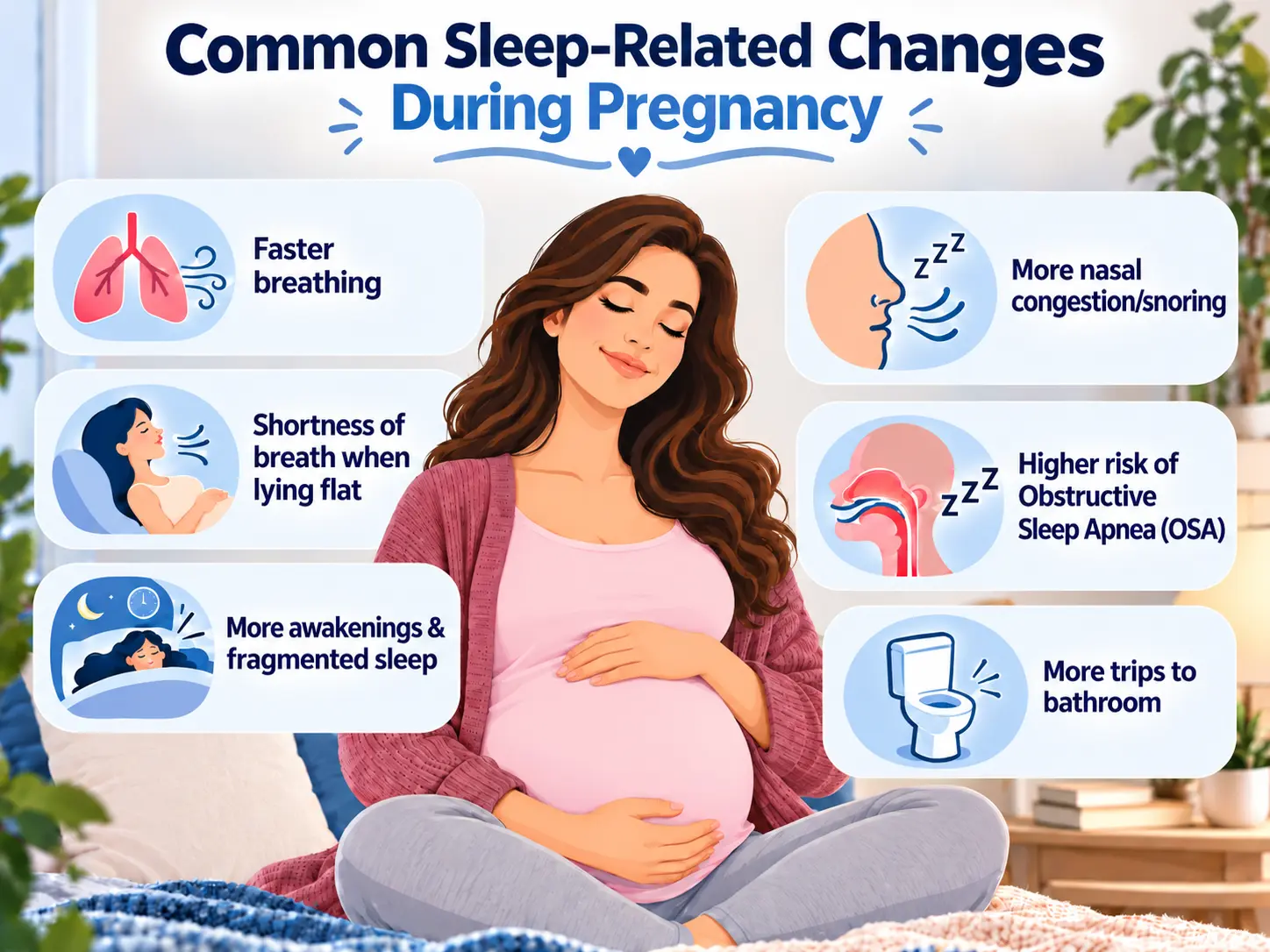
Common sleep-related changes during pregnancy include:
More nasal congestion/snoring: Pregnancy-related swelling of the nasal passages can narrow the upper airway.
Faster or deeper breathing: Progesterone naturally stimulates ventilation, so breathing may feel different even without lung disease.
More shortness of breath when lying flat: This is more common later in pregnancy.
More awakenings and fragmented sleep: Reflux, frequent urination, fetal movement, and breathing discomfort can all contribute.
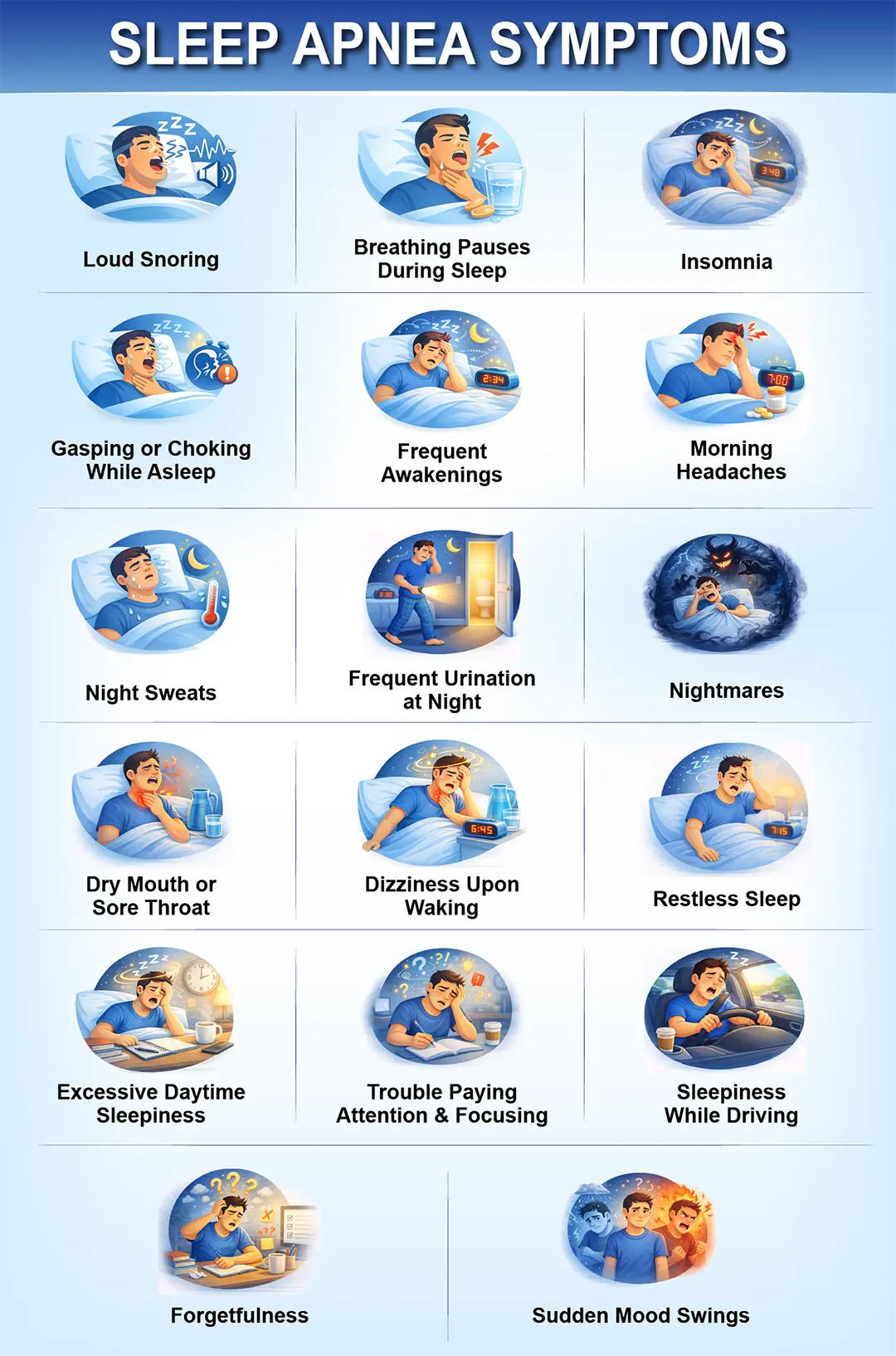
Higher risk of obstructive sleep apnea (OSA). Risk increases with pregnancy-related weight gain, pre-existing obesity, hypertension, and particularly preeclampsia. Symptoms include loud habitual snoring, witnessed pauses or gasping, morning headaches, and marked daytime sleepiness.
Why OSA Deserves Attention During Pregnancy
OSA during pregnancy has been associated with several complications affecting the mom or baby. These include:
Mom:
Hypertensive disorders of pregnancy.
Gestational diabetes
Severe maternal morbidity
Fetal:
Abnormal fetal growth
Preterm birth
Congenital malformations
Why is screening for OSA important during pregnancy?
Due to higher prevalence, difficult to recognize symptoms and higher morbidity in pregnancy, screening for OSA is important per American College of Chest Physicians. Screening using standard tools or pregnancy specific tools help identify patients who may need further evaluation with sleep studies.
What Happens if OSA Is Suspected?
Screening positive for OSA does not mean that someone has sleep apnea. However, if OSA is suspected, talk to your doctor about getting a sleep study. Depending on your clinical symptoms, medical history, insurance coverage, preference, and other clinical considerations, sleep apnea may be diagnosed using either a home sleep apnea test or an in-lab sleep study. A sleep study can help determine whether OSA is present, type of sleep apnea and how bad it is.
What Happens if the Sleep Study Is Positive for Obstructive Sleep Apnea?
If sleep study comes back positive for sleep apnea, treatment decisions are based on the apnea-hypopnea index (AHI), symptoms, sequelae, comorbidities, additional risk factors, patient’s preference, insurance, etc.
Understanding Apnea-Hypopnea Index (AHI):
AHI is a sum of apnea and hypopnea events per hour. An apnea event is when breathing during sleep stops for at least 10 seconds due to complete collapse of the airway leading to absence of airflow. While a hypopnea event is 30% reduction in airflow accompanied by 3-4% oxygen drop caused by partial collapse of airways.
How do we treat OSA in pregnancy?
Auto-Continuous Positive Airway Pressure (APAP) is a preferred treatment.
AHI between 5 and 15, treatment is recommended when OSA is accompanied by symptoms, comorbidities like stroke, diabetes, high-blood pressure, etc, preferably with Auto-CPAP.
For an AHI greater than 15, PAP therapy is recommended regardless of symptoms or comorbidities.
What to do when sleepy despite using APAP?
If despite using APAP, there is residual sleepiness, scheduled naps are useful whenever possible. Stimulants are not the first line of treatment.
Should there be a Reassessment for OSA After Delivery?
Postpartum women who were diagnosed with OSA during pregnancy should be reassessed for sleep-disordered breathing. Pregnancy-related changes that can contribute to OSA may improve after delivery. Reassessment can help determine whether sleep apnea is still present and whether continued treatment is required.
Conclusion
There are common symptoms during pregnancy that may overlap with OSA and, as a result, may make the underlying cause difficult to identify. Screening for OSA is important to ensure timely diagnosis and treatment during pregnancy. Post-partum re-evaluation for OSA is helpful as well.
If you’re pregnant and concerned about snoring, choking, gasping, or witnessed pauses in breathing during sleep, discuss these symptoms with your obstetric clinician, Primary Care Physician or reach out to us to book an appointment for further evaluation. Remember concern for sleep apnea during pregnancy is worth your prompt attention. At Telemedora, we provide personalized virtual sleep care for adults. If you are in one of the states we serve (CA, FL, GA, IL, IN, OR, and PA), call us at 650-687-7368(M–F 9 AM – 5 PM Pacific) or visit telemedora.com to book an appointment. At Telemedora, we have helped hundreds of patients with sleep apnea improve their quality of life. We bring expert sleep care directly to the comfort and privacy of your home, helping you get the rest you need to wake up refreshed, focused, and ready to crush your goals for the day.
Disclaimer
This is an educational blog and not medical advice. If you or your loved ones suffer from sleep issues, call Telemedora at 650-687-7368 or visit telemedora.com to find out how we can help you. Whether it's sleep apnea, insomnia, or just restless nights, Telemedora brings expert care directly to your home. We help patients get the rest they need so they can wake up refreshed, focused, and ready to crush their goals for the next day.