
Demystifying Obstructive Sleep Apnea

Obstructive Sleep Apnea (OSA) is a chronic, serious, and most common sleep disorder. It occurs when the throat muscles relax during sleep, causing complete or almost complete airways collapse, cutting off airflow intermittently. Many people think of sleep apnea as just loud snoring; however, sleep apnea when untreated can lead to significant morbidity and mortality. Although all the muscles in the body relax when we sleep, people with naturally narrow throats or large neck size are more prone to sleep apnea. When the airflow gets cut off, oxygen levels go down, and your brain kicks in a survival reflex that momentarily wakes you up so you can breathe again. This reflex is vital for staying alive, but it messes up your sleep, leaving you feeling tired.

Recognizing the Symptoms

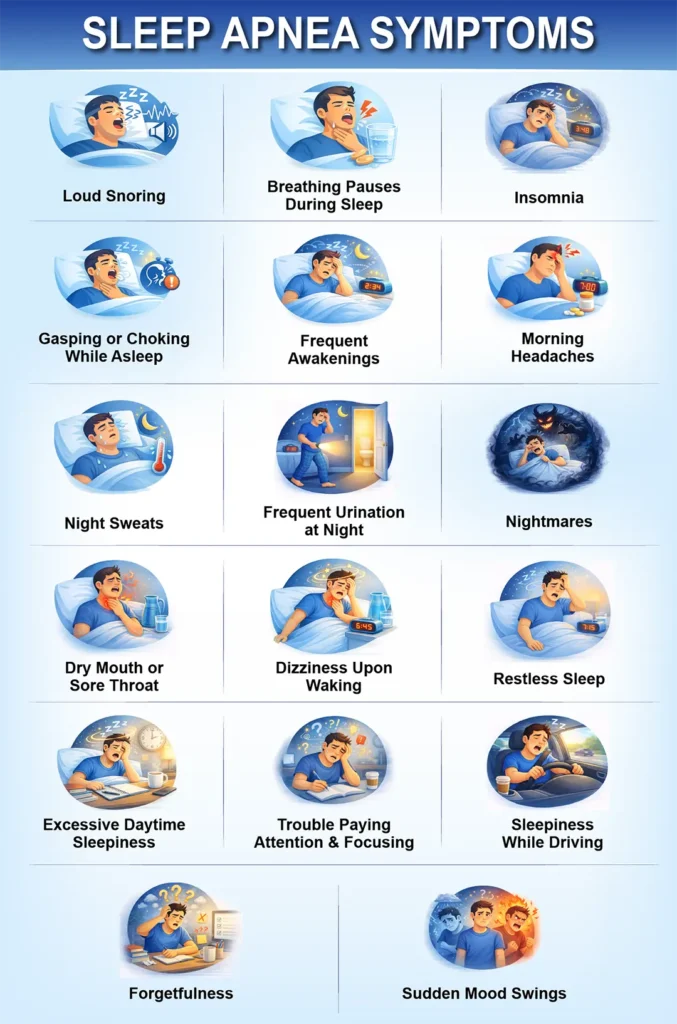
People with sleep apnea could suffer from symptoms during the night as well as during the day. These can vary from person to person. Many people don’t realize that they have sleep apnea until a partner, family member, or roommate notices something unusual during their sleep and/or during daytime.

Nighttime Symptoms

  • Loud Snoring: This is the most common sign, occurring when air pushes through a narrowed airway. However, not everyone who snores has sleep apnea, and not everyone with sleep apnea snores. 
  • Breathing Pauses: If you share a bed, your partner might notice you stop breathing while sleeping. This is scary and concerning for bedpartners. 
  • Gasping or Choking: When your throat closes during sleep apnea, this may cause you to wake up feeling short of breath or as if someone is trying to smother you. You might feel like you need to catch your breath. 
  • Restless Sleep: Sleep apnea often leads to frequent awakenings and difficulty staying asleep, also known as sleep maintenance insomnia.
  • Frequent Urination at Night: Waking up multiple times during the night to urinate is a common symptom that many individuals overlook.

Daytime Symptoms

  • Dry Mouth & Morning Headaches: Many people with sleep apnea wake up with a dry mouth, sore throat, drooling, or even headaches, all because of not sleeping well and not getting enough oxygen at night. They can be mouth-breathers.
  • Non-restrorative Sleep: Despite getting adequate amounts of sleep, people with sleep apnea tend to wake up feeling as if they have not slept enough. They feel tired in the morning. 
  • Excessive Daytime Sleepiness: It is also known as hypersomnia. It can be so severe that you may feel sleepy even when you are driving, listening to lectures, watching TV or even talking to someone.
  • Brain fog and Cognitive Issues: Sleep apnea disrupts the brain’s oxygen supply, and this lack of adequate oxygen can negatively affect attention, concentration, and memory retention.
  • Mood Changes: Not getting enough sleep over time can make people feel cranky, anxious, or even depressed. Some patients with sleep apnea tend to snap easily at others.

Causes and Risk Factors

OSA or sleep apnea is caused by a combination of lifestyle, anatomical, biological, genetic, medical, positional factors.

  • Lifestyle: Certain factors like Obesity and Alcohol are linked to OSA. Obesity is the most common cause of OSA in adults. Extra fat around the neck increases soft tissue in the throat, which can block the airway. Even a 10% increase in body weight can raise the risk of OSA sixfold. Also, drinking alcohol six hours before bedtime can relax your throat muscles too much, making it easier for your airway to collapse.
  • Anatomical: Structural features like a narrow throat, large tonsils, recessed or small jaw,  a thick neck (over 17 inches for men, 15 inches for women), or a deviated nasal septum increase risk.
  • Biological: Age and gender play an important role in OSA. It tends to be more common in older adults (50 or above) and is 2-3 times more common in men than women, though women’s risk increases after menopause.
  • Genetics: A family history of OSA or if someone has genetic conditions (Prader-Willi Syndrome (PWS), acromegaly, etc. have been closely linked to OSA.
  • Medications: Certain medications, including sleeping pills, narcotics, muscle relaxants, and anxiolytics, can depress the central nervous system, overly relax throat muscles, and increase the risk of airway collapse during sleep or even respiratory failure. 
  • Positional: Sleeping on your back raises the risk of OSA by allowing the tongue and soft throat tissues to narrow or block the airway. Sleeping on your side can significantly reduce apnea events by keeping the airway open.

Consequences of Untreated Obstructive Sleep Apnea

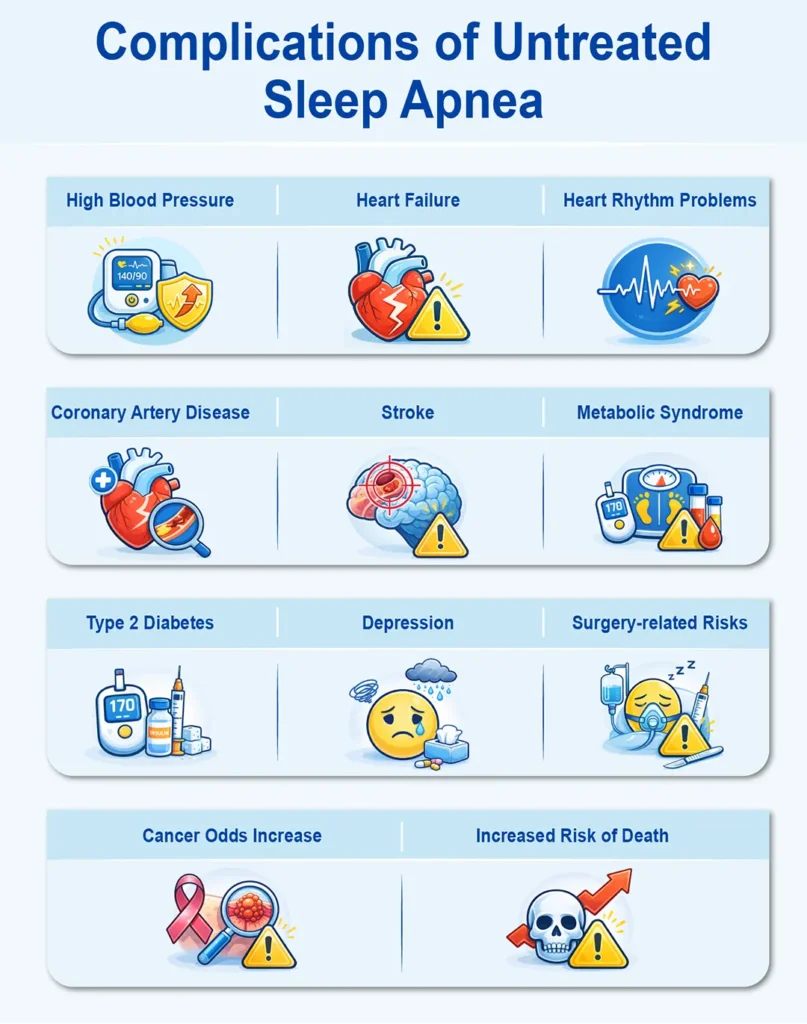
Sleep apnea is not just a sleep problem, it is a whole-body disease that affects multiple organs. If left untreated, the consequences can be life-threatening.

Cardiovascular Health

Sleep apnea places immense stress on the heart. It is a strong, independent risk factor for high blood pressure; about 50% of sleep apnea patients suffer from high blood pressure. The repeated drops in oxygen strain the cardiovascular system, increasing the risk of heart failure, coronary artery disease, and stroke. Furthermore, abnormal heart rhythms, particularly atrial fibrillation, are very common in patients with sleep apnea.

Brain Health

Poor oxygen supply during sleep can damage the brain over time. Sleep apnea has been linked to memory loss, difficulty concentrating, and a short attention span. It has been associated with neurological diseases such as Alzheimer’s dementia and Parkinson’s disease.

Metabolic Health

Sleep apnea has been linked to metabolic syndrome and type 2 diabetes. Sleep apnea negatively affects how the body handles sugar, leading to poor glucose metabolism and insulin resistance.

Mental Health

People with untreated sleep apnea often experience mood swings, irritability, anxiety, and depression. Ongoing poor sleep can also reduce focus, motivation, and overall quality of life

Surgical Risks

Untreated sleep apnea increases the risk of serious complications during surgery, such as cardiac arrest and respiratory failure.

Cancer Risk

Research suggests a troubling link between sleep apnea and certain cancers. Low oxygen levels during sleep may encourage tumor growth and worsen cancer outcomes.

Motor Vehicle Accidents

Studies have shown that OSA patients tend to get into fatal head-on MVA collisions more while driving. Sleepy drivers tend to have more lane drift.

Diagnosis of Sleep Apnea

Diagnosing sleep apnea begins with a medical evaluation of your sleep habits, symptoms, and risk factors. If your clinician suspects sleep apnea, they will recommend a sleep test to look for it.

Types of Sleep Studies Used for OSA Diagnosis

Below are some types of sleep studies used to diagnose sleep apnea and observe the activity of your brain, heart, lungs, and body during sleep.

Polysomnography (In-Lab PSG)

This is considered the gold standard sleep study for diagnosis. Conducted in a sleep center. This study is used to monitor the following during sleep: Brain activity, sleep time, sleep stages, eye movements, heart rate and rhythm, breathing effort, oxygen level, snoring, body position, leg movements and abnormal sleep behavior. It can identify other disorders in addition to sleep apnea like periodic limb movements, parasomnias, etc. Cons: Inconvenient, long wait time and expensive.

Home Sleep Apnea Test (HSAT)

A home sleep apnea test is a simplified version that records several key body functions while you sleep in the comfort of your own home and bed. While convenient, affordable, and comfortable, it is less detailed than in-lab studies and cannot diagnose other disorders. It tends to miss sleep apnea in some cases, therefore, if it is negative, further evaluation with PSG is recommended.

Home Sleep Apnea Testing

This test records several key body functions while you sleep at home, including breathing, oxygen levels, heart rate, and sometimes airflow, snoring, and body movements. It is convenient and provides enough information to detect most cases of obstructive sleep apnea. There are different types of home sleep apnea tests available in the market. They can be single night, disposable or multiple nights.

Home PSG (Polysomnography)

A home PSG is a more detailed home study that monitors brain activity, eye movements, muscle activity, heart rate, breathing, and oxygen levels. It provides more complete data than standard HSAT.

10 Benefits of a Sleep Study

Getting a good night’s sleep isn’t always easy. Even if you go to bed on time, you might wake up feeling tired or groggy. Sleep studies help doctors understand what’s happening while you sleep and find ways to improve it.

Here are 10 ways a sleep study can help you:

  1. Find the Problem: Sleep studies can identify if you have sleep disorders like sleep apnea, insomnia, or restless leg syndrome. Knowing the exact issue is the first step toward getting better sleep.
  2. Personalized Treatment: Doctors can use the results to create a treatment plan tailored just for you. This ensures that the solution addresses your unique sleep challenges.
  3. Check Breathing: Sleep studies track your breathing and oxygen levels while you sleep. This helps detect issues like pauses in breathing that you may not even notice.
  4. Feel More Alert During the Day: Treating sleep problems can make a huge difference in how you feel during the day. Better sleep improves focus, memory, and overall energy levels.
  5. Protect Your Health: Untreated sleep problems can increase the risk of heart disease, high blood pressure, diabetes, and other health issues. A sleep study can help prevent these long-term risks.
  6. Track Sleep Patterns: Sleep studies monitor your sleep cycles, including deep and REM sleep. Understanding these patterns helps doctors see if you’re getting restorative sleep.
  7. See if Treatment Works: If you are already using treatments like a CPAP machine, a sleep study can show whether it is effective. This ensures your therapy is actually helping you sleep better.
  8. Spot Unusual Movements: Some people move, twitch, or even sleepwalk at night. Sleep studies can detect these unusual behaviors and provide guidance to manage them.
  9. Support Mental Health: Poor sleep is linked to stress, anxiety, and depression. By improving sleep, you can also boost your mood, emotional health, and mental well-being.
  10. Guide Lifestyle Changes: Doctors can use the results to suggest helpful changes in your habits, diet, or bedroom environment. Even small adjustments can lead to big improvements in sleep quality.

A sleep study is about understanding your sleep and making sure your body and mind get the rest they need. After all, good sleep is the foundation of a healthy, happy life!

Severity of OSA: AHI

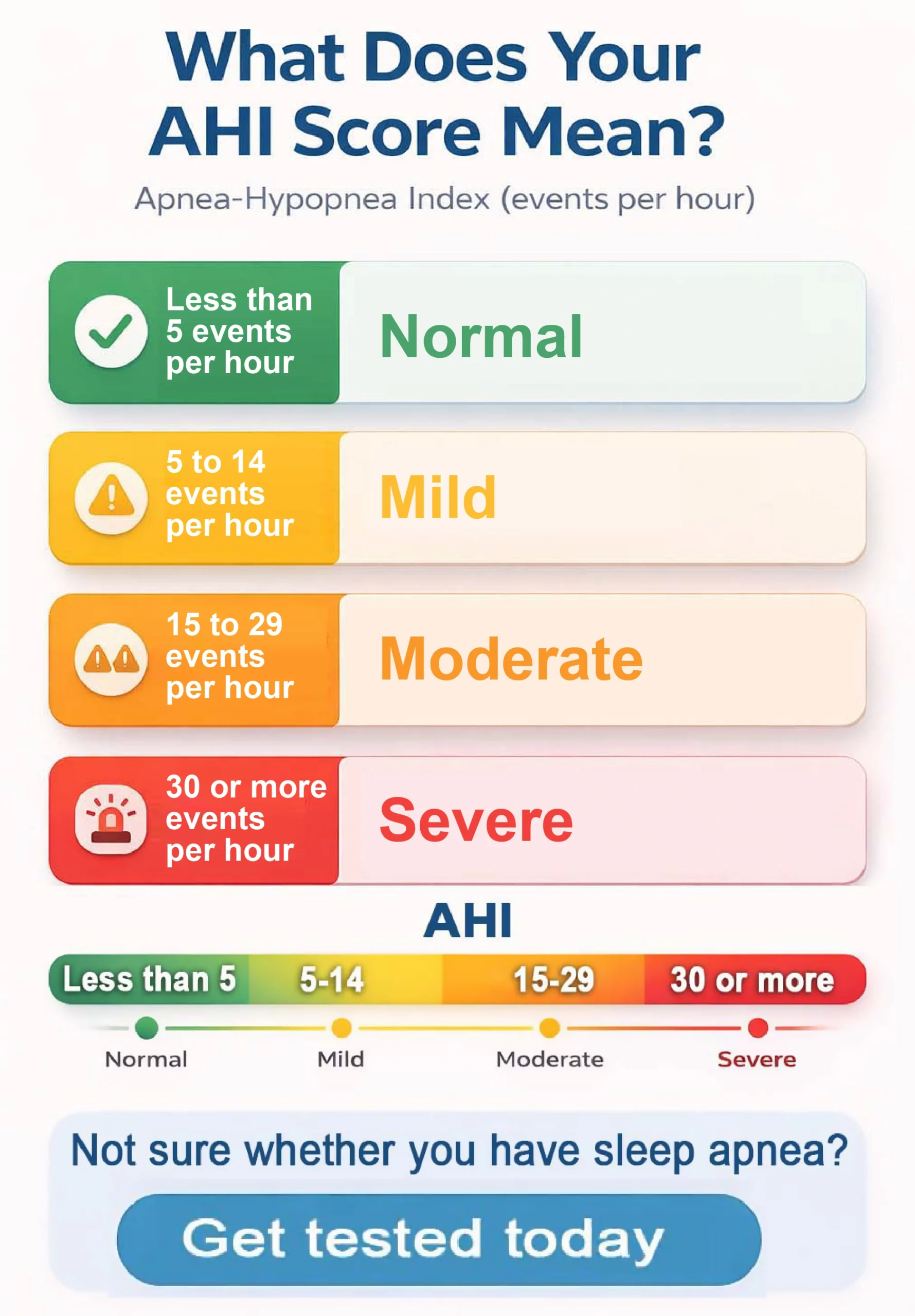
Severity of OSA is determined by Apnea-Hypopnea Index (AHI) which is a sum of apnea and hypopnea events per hour. An apnea event is when you stop breathing completely for at least 10 seconds due to complete collapse of the airway leading to absence of airflow. While a hypopnea event is caused by partial collapse of airways causing reduced airflow and oxygen drop by 3-4%.

Treatment Options

Treatment of sleep apnea is not one size fits all, it needs to be tailored-based on the severity of sleep apnea and patient preference.
Let’s take a look at some of the treatment options for OSA.

Positive Airway Pressure (PAP) Therapy

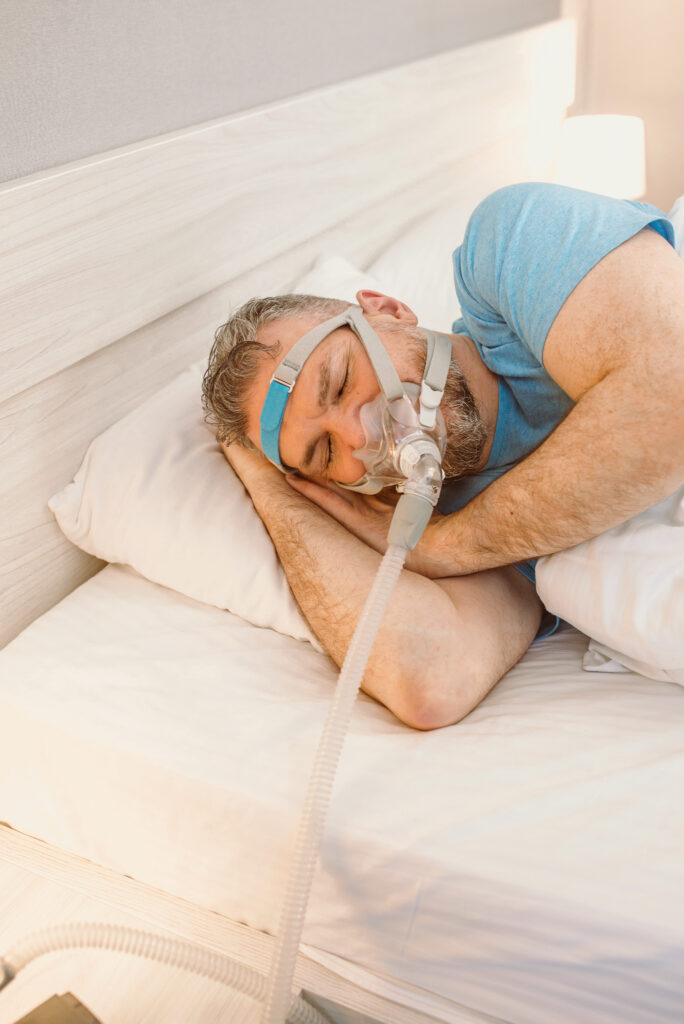
If diagnosed, the most common and effective treatment is Positive Airway Pressure (PAP) therapy. These devices deliver pressurized air through a hose and mask to keep the upper airway open during sleep.

CPAP (Continuous Positive Airway Pressure) Therapy

The most well-studied device for the treatment of sleep apnea is CPAP. It provides a steady stream of the same positive airway pressure during inspiration and expiration . It splints open the airway during sleep and prevents it from collapsing. This leads to optimal oxygen supply to the vital organs of the body during sleep, improves sleep quality and minimizes the risk of serious complications of untreated sleep apnea like heart attacks and stroke.

  • APAP (Auto-Adjusting PAP): These machines automatically adjust air pressure based on your breathing patterns and snoring throughout the night.
  • BiPAP (Bilevel PAP): Designed for those who struggle with standard CPAP, BiPAP provides higher pressure when inhaling and lower pressure when exhaling, making it easier to breathe out.
  • Expiratory Positive Airway Pressure (EPAP): EPAP devices are non-motorized and consist of small valves inserted into the nostrils. These valves create resistance during exhalation to keep the airway open. 

Success with PAP therapy requires good compliance. Users should wear the mask every time they sleep, clean the equipment daily, and work with their clinician to resolve side effects like dry mouth or mask irritation. By following all these steps optimizes the chances of successful treatment.

Oral Appliances and Other Devices

For patients with mild to moderate sleep apnea who cannot tolerate CPAP, oral appliances are a valuable alternative. These custom-fitted devices look like sports mouthguards but are designed to keep the airway open mechanically.

  • Mandibular Advancement Devices (MADs): These snap over the teeth and gently pull the lower jaw forward, which in turn creates space in back of the throat and opens the airway.
  • Tongue-Stabilizing Devices: These use suction to hold the tongue forward, preventing it from rolling back and blocking your windpipe.
  • Tongue Muscle Stimulation Devices: This is a newer technology recently approved by the FDA. It isn’t a mouthpiece you wear while sleeping; it’s a therapy device. One example of this technology is eXciteOSA, a removable device designed for daytime use. It supplies neuro-muscular electrical stimulation to the tongue muscle and prevents it from rolling back. It improves the endurance of tongue muscles.

It is crucial that these devices are custom-fitted by a dentist trained in sleep medicine to ensure effectiveness and monitor for side effects like bite changes.

Medications

  • Zepbound (Tirzepatide): As of December 2024, this injectable medication is approved for adults with both sleep apnea and obesity. By mimicking a hormone called GLP-1,  it induces weight loss (about 18-20% of body weight) leading to significant reduction in the severity of sleep apnea.

The landscape of sleep apnea treatment is evolving to include pharmaceutical options.

  • Positional Therapy: Avoid sleeping on your back because it causes gravity to pull the tongue backward, blocking the airway and causing sleep apnea. Sleeping on your side can significantly reduce symptoms in mild cases.

Other Therapies

Inspire Hypoglossal Nerve Stimulator (HNS)

HMS is a treatment for sleep apnea that uses a small implantable device to keep the airway open. It has three parts: a stimulator in the chest, a lead on the hypoglossal nerve to move the tongue, and a sensor that detects breathing. When you inhale, the device sends mild pulses to push the tongue forward, stopping airway collapse. It turns off during exhalation and repeats each breath. Patients can control it with a remote, and it helps reduce apnea and improve sleep.

BongoRx

Bongo Rx is a small, simple medical device used to treat mild to moderate obstructive sleep apnea without a CPAP machine. It fits just inside your nostrils and uses your own breathing to create EPAP — when you breathe out, tiny valves close and push air back into your airway to help keep it open. It doesn’t need electricity, hoses, or batteries, and it’s portable, reusable, and FDA‑cleared with a prescription.

Future directions

  • Apnimed’s Daily Pill: Currently in development, this experimental pill targets the throat muscles rather than weight. It works by stimulating the brainstem to keep airway muscles toned during sleep, preventing collapse. Early tests suggest it could reduce apnea severity by nearly 50%, with potential availability by 2027.

Lifestyle Changes That Can Help You Manage Sleep Apnea

While medical treatments are often necessary, lifestyle changes are a critical part of managing sleep apnea.

  • Maintain a Healthy Weight: Losing even a small amount of weight can reduce the severity of symptoms by decreasing the fat stored around the neck.
  • Review Medications: Be cautious with opioids, muscle relaxers, and certain anxiety medications, as they can slow breathing and relax airway muscles.
  • Exercise Regularly: 30 minutes of moderate exercise can improve oxygen levels and sleep quality, even independent of weight loss.
  • Adhere to Therapy: For those on CPAP, consistency is key; using the machine every night for at least 6 hours has been shown to reduce the chances of serious diseases associated with sleep apnea.
  • Avoid Alcohol: Alcohol must be avoided because even in moderation it negatively impacts sleep quality. As a central nervous system depressant, it significantly relaxes the throat muscles, leading to sleep apnea.

By combining medical treatment with healthy lifestyle habits, you can reduce your health risks, regain your energy, and reclaim your quality of life. If you suspect you or a loved one has sleep apnea, do not wait to seek medical advice.

Screen Yourself for Sleep Apnea with STOP-BANG questionnaire

Wondering about your risk for obstructive sleep apnea? This STOP-BANG questionnaire can help identify patterns commonly associated with OSA. Your answers may offer early insight into whether sleep apnea could be a concern. Because the warning signs aren’t always obvious, this quick screening is a helpful first step in understanding your potential risk.

The STOP-BANG questionnaire was created to screen for undiagnosed obstructive sleep apnea (OSA) before surgery. It combines simple questions (STOP) with physical factors (BANG: Body mass, Age, Neck size, Gender) to help identify people at risk. Studies have shown it is a reliable and effective tool for detecting mild, moderate, and severe OSA.

Conclusion

At Telemedora, we recognize the profound impact that untreated sleep apnea can have on an individual's life. We understand the chronic fatigue, the frustration of restless nights, and the serious long-term health risks associated with this condition. It is this understanding that drives our commitment to providing a patient-centered, comprehensive care model.
Our approach begins with a commitment to personalized treatment. We move beyond a one-size-fits-all methodology, recognizing that every patient's sleep apnea is unique, influenced by individual physiology, lifestyle, and severity.
We utilize advanced diagnostic tools and consult with board-certified sleep specialists to create a treatment plan tailored precisely to your needs.
Furthermore, Telemedora is dedicated to longitudinal care, a philosophy of continuous support that extends far beyond the initial diagnosis and treatment setup. Sleep apnea management is not a one-time fix; it requires ongoing vigilance and adjustment. The sustained support is crucial for ensuring long-term adherence to treatment, optimizing health outcomes, and ultimately helping you reclaim restful sleep and a better quality of life.

Disclaimer

This is an educational blog and not medical advice. If you or your loved ones suffer from sleep issues, call Telemedora at 650-687-7368 or visit telemedora.com to find out how we can help you. Whether it's sleep apnea, insomnia, or just restless nights, Telemedora brings expert care directly to your home. We help patients get the rest they need so they can wake up refreshed, focused, and ready to crush their goals for the next day.

Skip to content